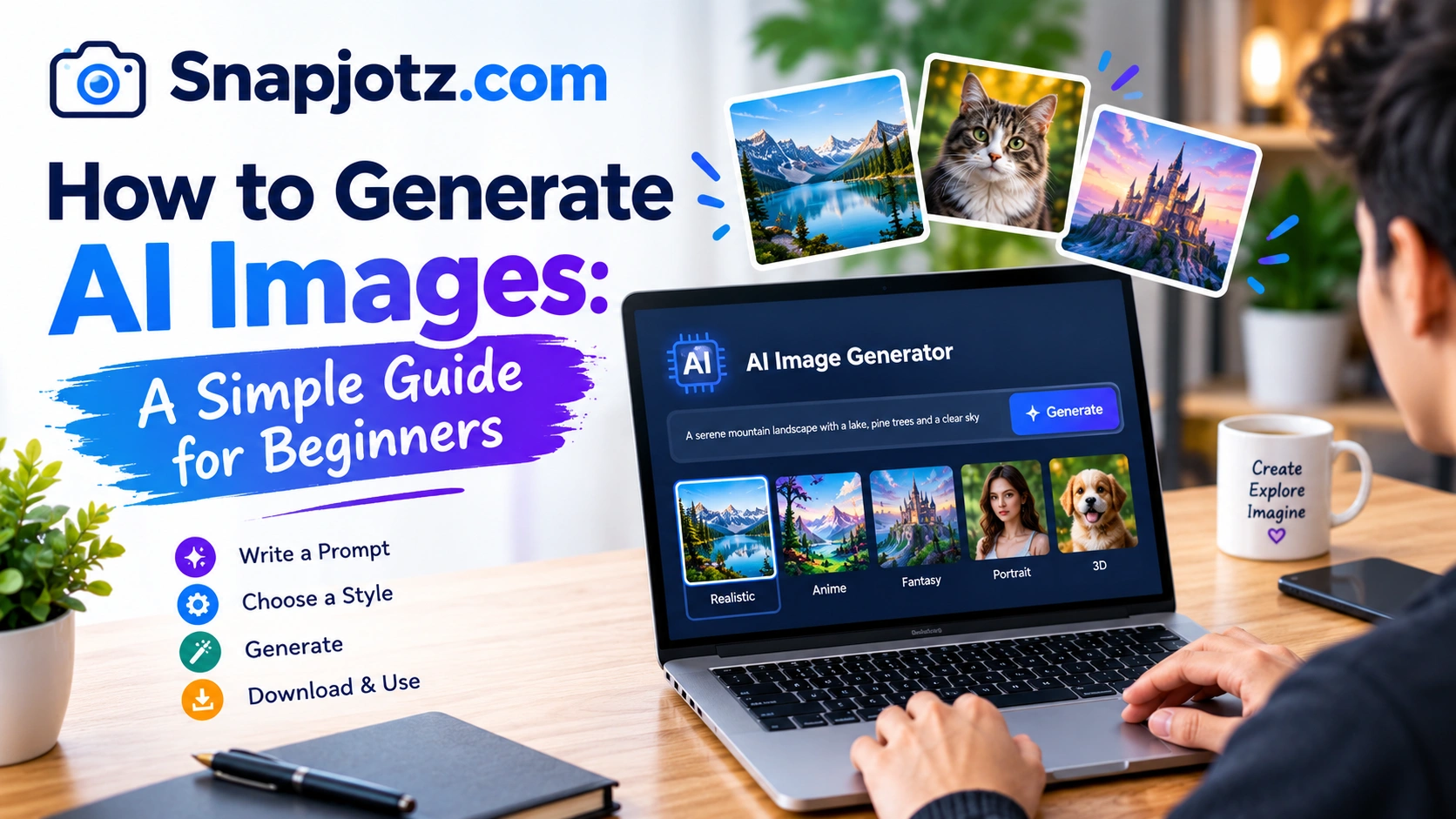
AI image tools have changed the way people make pictures for blogs, social media, projects and personal use. By spending hours learning complicated design software you can say an idea and let an AI tool turn that idea into an image. If you are looking for Snapjotz.com How to Generate AI Images this guide will help you understand the steps. You will learn how to write descriptions, pick the right look, avoid typical errors and get better outcomes.
What Makes AI Image Creation So Helpful?
AI image creation lets people make pictures from text directions. You can say a person, place, item, scene, feeling, color or art style and the tool can use those details to make an outcome.
For example you could ask for a mountain village at sunrise, a new office with big windows or a bright food poster. The more clearly you explain your idea, the easier it becomes to get a result that is close to what you want.
When learning Snapjotz.com how to make AI images start with ideas instead of trying to make a very detailed scene on your first try.
How to Create an AI Image Step, by Step
The process usually takes simple steps. While different websites may have different buttons or options the main idea stays the same.
Start With a Clear Image Idea
Before writing your prompt, decide what you want the picture to show. Think about the main subject first.
For example, you might want:
- A girl reading beside a window
- A cozy coffee shop on a rainy evening
- A sports car on a city street
- A peaceful beach at sunset
- A professional business workspace
A clear idea gives your prompt a strong starting point.
Write a Detailed but Simple Prompt
Your prompt tells the AI what to create. You do not need complicated words. A short, descriptive sentence often works well.
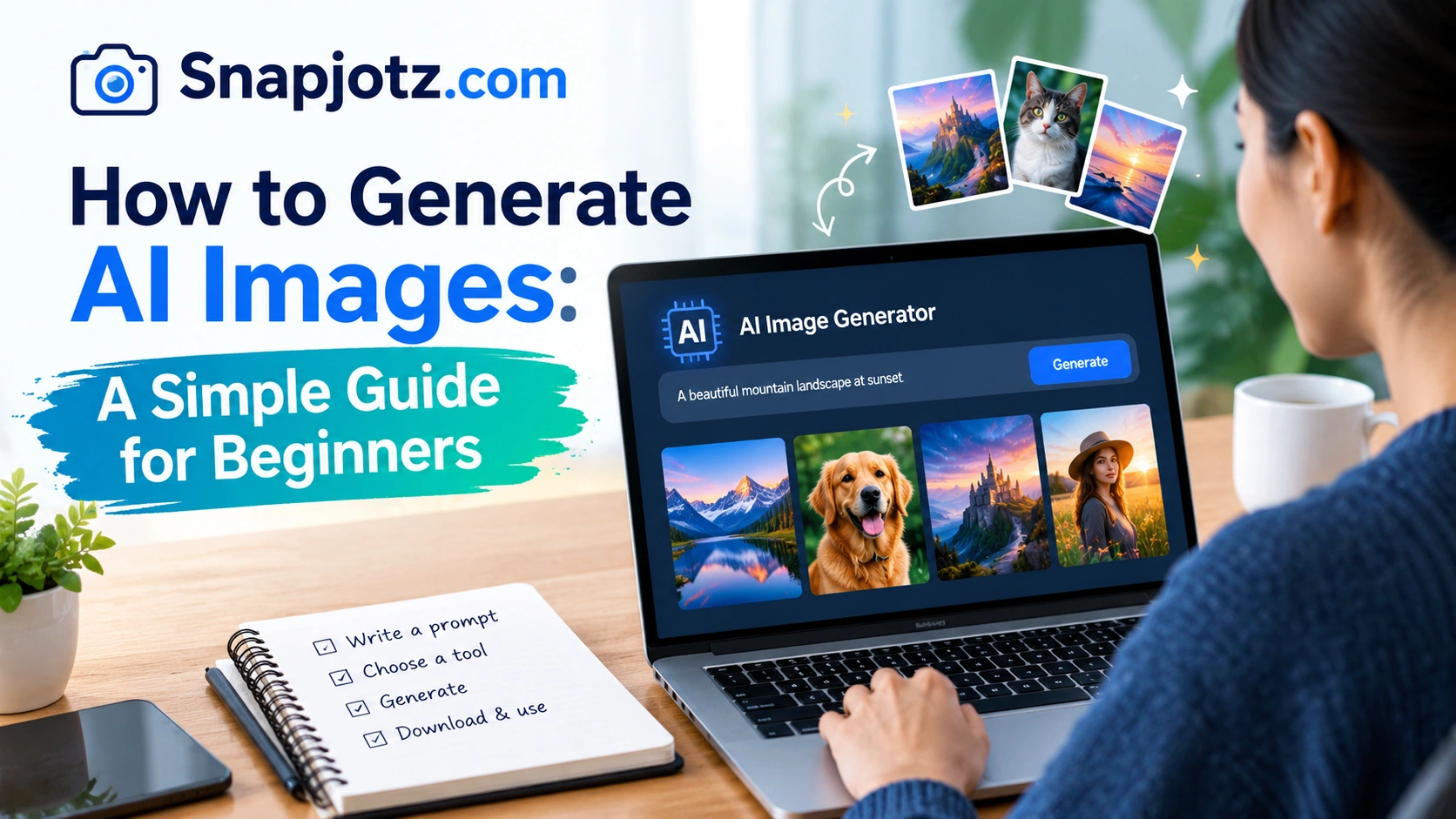
For example:
A young woman reading a book beside a large window, warm morning light, cozy room, realistic photography.
This prompt includes the subject, activity, setting, lighting, and style. Those details help guide the image.
If you are studying Snapjotz.com how to generate AI images, prompt writing is one of the most important skills to learn.
Choose a Suitable Style
AI image tools can create many different visual styles. Your choice should match the purpose of the image.
You may want:
- Realistic photography
- Digital art
- Watercolor
- Pencil sketch
- 3D render
- Cartoon illustration
- Cinematic scene
- Minimalist design
For a blog article, realistic images may work well. For a children’s project, an illustration or cartoon style may feel more suitable.
Generate the First Version
Once you enter your prompt, start the generation process. The tool may create one or more images based on your instructions.
Do not worry if the first result does not look perfect. AI image generation often works best as a process of testing and improving.
Look at the image carefully. Check the person’s face, hands, background, objects, lighting, and overall composition.
How to Write Better AI Image Prompts
A strong prompt can make a big difference. You can build one by describing the image in a logical order.
A useful prompt structure looks like this:
Subject + action + location + appearance + lighting + style + composition
For example:
A young man walking through a modern city street, casual clothing, evening lights, realistic photography, cinematic composition.
This gives the AI several useful details without making the instruction confusing.
When exploring Snapjotz.com how to generate AI images, remember that clarity matters more than using fancy words.
Describe the Main Subject First
Start by telling the AI what matters most. If you want a picture of a dog, mention the dog before describing the background.
For example:
A golden retriever sitting on green grass in a sunny park.
This makes the main subject clear from the beginning.
Add Important Visual Details
Next I would like you to explain details that affect the appearance. You can mention clothing, colors, weather, time of day facial expression, camera angle or surroundings.
For example:
A woman wearing a white summer dress standing beside a lake at sunset, golden light.
I do not need to describe every detail. Many instructions can sometimes make the result less focused.
Common Prompt Mistakes to Avoid
Many beginners make the mistakes when beginners first use AI image tools. Understanding mistakes can save time.
Avoid Very Short Prompts
A prompt such as “beautiful house” gives the AI very little direction. The tool has to make many decisions on its own.
Instead, describe the type of house, location, lighting, and style.
Do Not Add Conflicting Instructions
Avoid asking for opposite styles in the same prompt. For example, “realistic photograph with a flat cartoon drawing style” may confuse the visual direction.
Choose one main style and describe it clearly.
Do Not Overload the Prompt
More words do not always create better images. If your prompt contains too many unrelated details, the AI may struggle to understand what matters most.
Keep the description focused and remove unnecessary instructions.
A Quick Guide to AI Image Settings
Some AI image platforms provide different settings that can affect the final picture. Understanding these options can help you make better choices.
| Setting | What It Controls | Useful For |
| Image size | Overall dimensions | Social posts, blogs, wallpapers |
| Aspect ratio | Image shape | Portrait, landscape, square images |
| Style | Visual appearance | Photos, art, illustrations |
| Quality | Level of visual detail | Professional-looking images |
| Variations | Different versions | Comparing ideas |
| Prompt | Main instructions | Controlling the scene |
When learning Snapjotz.com how to generate AI images, experiment with one setting at a time. This makes it easier to understand what each option changes.
Choosing the Right Image Size
Image size matters because different platforms use different shapes. A square image can work well for profile pictures and some social media posts.
A landscape image usually works better for blog headers, website banners, and video thumbnails. Portrait images can suit mobile screens, profile designs, and story-style posts.
Before creating an image, think about where you want to use it. This simple step can stop cutting later.
How to Make More Realistic AI Images
Realistic images usually need information about lighting, camera style and the place around.
You can use words like lighting, realistic photography, detailed textures, shallow depth of field or professional camera photography when they match your goal.
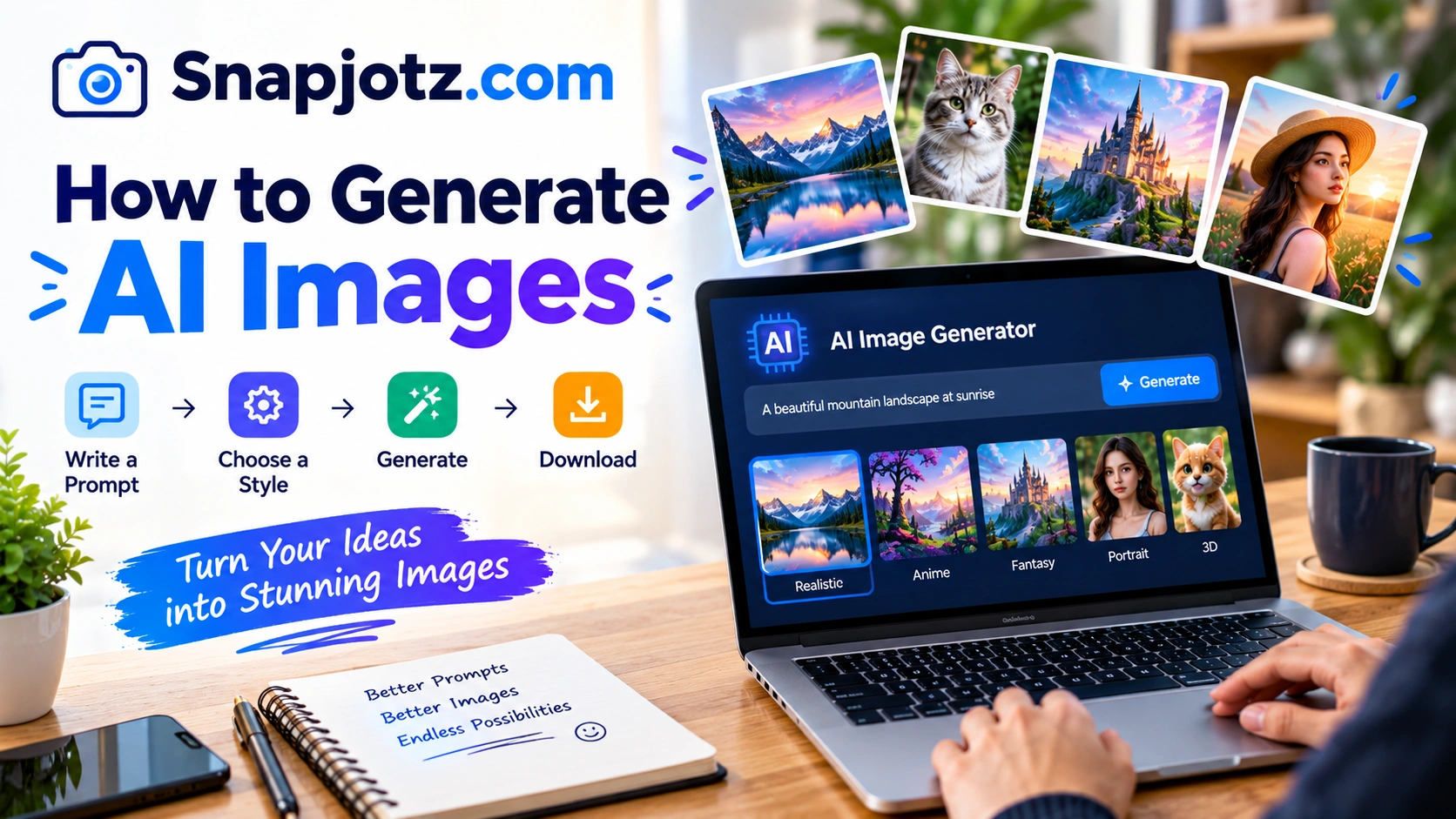
For example:
A wooden cabin near a quiet lake in the early morning mist, natural sunlight, realistic landscape photography, and detailed textures.
The aim is not to add as many words as possible. Instead pick details that help the scene.
How to Fix an AI Image That Looks Wrong
Sometimes an AI-made picture might have hands, odd objects, wrong text or a background that does not look real. This does not always mean the tool did something.
First, identify the exact problem. Then change your prompt and generate another version.
For example, if the background looks too busy, ask for a clean and simple background. If you want a closer view, request a close-up composition.
This step-by-step approach is useful when practicing Snapjotz.com how to generate AI images because each new attempt teaches you what works.
Improve One Problem at a Time
Do not completely rewrite your prompt after every result. Change one or two important details first.
This helps you understand which instruction affected the image. Over time, you will become much better at writing prompts.
Practical AI Image Examples
AI images can support many everyday projects. Bloggers can create featured images for articles, while social media users can design original posts.
Students may use visuals for presentations if their school rules allow it. Students should check their school rules before using AI‑generated visuals. Small businesses can also use custom images for ideas, mockups and promotional concepts as long as they follow the platform’s terms and the applicable copyright rules. Small businesses should read the platform’s terms carefully. Respect copyright rules.
If you are learning Snapjotz.com how to generate AI images, try creating images for different purposes. This gives you practical experience instead of only testing random prompts.
Example for a Blog
Try a prompt like:
A peaceful home office with a laptop, wooden desk, indoor plants, large window, soft morning sunlight, realistic photography.
Example for Social Media
Try:
Colourful tropical sunset over a quiet beach, palm trees, warm sky, vibrant photography, wide composition.
Example for a Product Concept
Try:
A modern white sneaker displayed on a clean studio platform, soft shadows, simple background, professional product photography.
These examples show how small details can shape the final result.
Tips for Getting Consistent Results
Consistency matters when you need several images for the same project. Try to keep important details similar across your prompts.
Use the same subject description, visual style, lighting, and colour direction when possible. If the platform provides a seed, reference image, or style control, these features may also help maintain a similar look.
Another useful tip is to save prompts that produce good results. You can then reuse them as a starting point for future images.
What Should Beginners Know About AI-Generated Images?
AI image generation is easy to start, but good results require practice. The tool does not always understand your idea exactly as you imagine it.
Think of the prompt as a conversation with the image generator. Start with the main idea, add useful details, review the result, and make small improvements.
As you practice Snapjotz.com how to generate AI images, you will learn which words and descriptions produce the visual style you want.
Is AI Image Generation Free?
Some AI image services give free image generation while others charge credit points, monthly subscriptions or one‑time fees. Features can also differ from one platform to another.
Always look at the terms of each specific service before you use its generated images for commercial work. Pay attention to ownership rules, licensing conditions, trademark notices and any limits on certain kinds of images.
How Can You Use AI Images Responsibly?
AI‑generated images can be useful. Responsible use matters a lot. Do not use pictures to trick people about real events or real people.
You should also avoid making images that break someone’s privacy pretend to be someone or misuse protected brands and creative works. When an image backs a claim use reliable real‑world sources instead of showing an AI‑generated picture as real evidence.
Final Thoughts
Learning to generate AI images on Snapjotz.com does not need design skills. The key is to start with an idea, write a simple prompt, pick a suitable style and review each result carefully.
Good AI images usually come from tweaks instead of a single perfect prompt. Try subjects, different lighting, different ways to arrange things in the picture and different sizes for the image until you see what looks good. With practice you can make pictures that’re helpful for blogs, social media for personal projects, presentations and for lots of other things you need every day.
The main thing to learn is easy: say what you want, keep your directions clear and focused and make the picture better one step at a time.
Frequently Asked Questions
What is AI image generation?
AI image generation creates pictures from written instructions called prompts. The tool interprets your description and produces a visual result based on it.
How do I write an AI image prompt?
Start with the subject of the AI image prompt then add the setting, action, lighting, style and composition. Keep the instructions, for the AI image prompt clear and avoid details.
Can beginners generate AI images?
Yes, beginners can start with simple text prompts and improve their results through practice. You do not need professional graphic design skills to begin.
Why does my AI image look different from my prompt?
AI tools may interpret certain words differently or struggle with complex instructions. Try simplifying the prompt and change one detail at a time.
Can I use AI‑generated images on a website?
You might use AI‑generated images on a website. The rules depend on the service and, on the current license terms. I would recommend checking usage rights before using AI‑generated images.